Sermons That Work From Matthew 1:1-25 establishes Jesus Christ as Israel’s promised King through three important truths. His genealogy confirms His legal royal ancestry through David, His virgin birth fulfills biblical prophecy, and His name identifies His mission to save sinners. Together, these truths establish His identity as the promised Messiah and Savior.

Key Takeaways – Sermon From Matthew 1:1-25
- Jesus Christ Is Israel’s Promised King (Matthew 1:1-17): His genealogy confirms His Jewish and royal heritage through Abraham and David. Trust God’s faithfulness because He always fulfills His promises.
- Jesus Christ Came Through a Miraculous Birth (Matthew 1:18-20, 22-25): His conception through the Holy Spirit fulfills biblical prophecy and reveals Him as Immanuel, meaning “God with us.” Trust God’s power and presence during life’s challenges.
- Jesus Christ Came to Save Sinners (Matthew 1:21): His name reveals His mission to save people from their sins through His death and resurrection. Receive His forgiveness through faith and share His wonderful message of salvation with others.
Introducing Jesus Christ the King
Matthew 1:1-25 introduces Jesus Christ as Israel’s promised King and the Savior of the world. His genealogy confirms His Jewish and royal heritage, revealing God’s faithfulness to His covenant promises. His miraculous birth demonstrates God’s supernatural power and fulfills His prophetic Word. Finally, His name reveals His saving purpose, reminding us that Jesus came to rescue sinners through His death and resurrection.
These wonderful truths remind us that God always keeps His promises and accomplishes His purposes. When life brings uncertainty, we can trust His Word because His faithfulness never fails. As we reflect on Jesus Christ, let us recognize Him as our Savior and coming King. May we respond with grateful hearts, obedient lives, and unwavering faith in the One who came to save us.
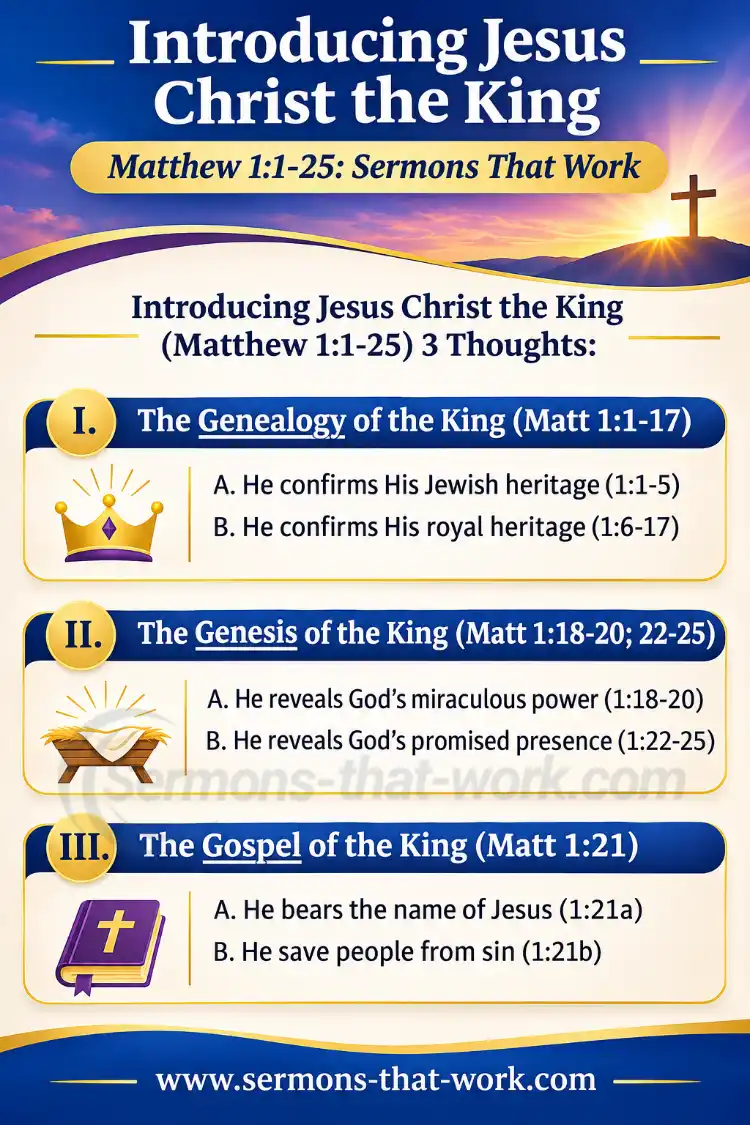
1. The Genealogy of the King (Matthew 1:1-17)
Matthew establishes Jesus Christ as Israel’s promised King by tracing His ancestry through Abraham and David. (Summary Statement)
A. He Confirms His Jewish Heritage (Matthew 1:1-5)
Matthew begins by tracing Jesus Christ’s family line through Abraham, the father of the Jewish nation. God promised Abraham that all nations would receive blessing through his descendants (Genesis 12:1-3). This genealogy confirms Jesus’ Jewish heritage and connects Him to God’s covenant promises. His coming demonstrates that God faithfully fulfills His Word.
God’s faithfulness to Abraham reminds us that His promises never fail, even when their fulfillment takes generations. We often struggle when God does not answer according to our timetable. Yet Jesus’ genealogy reminds us that God’s plans unfold according to His perfect timing. We can trust Him because He always keeps His Word (Numbers 23:19).
B. He Confirms His Royal Heritage (Matthew 1:6-17)
Matthew continues by tracing Jesus’ royal family line through King David and his descendants. God promised David that his throne and kingdom would endure forever (2 Samuel 7:12-16). Through Joseph, Jesus received the legal credentials of David’s royal family. His genealogy establishes His rightful claim as Israel’s promised King, who will fulfill God’s kingdom promises.
Earthly kings rise and fall, but God’s promise concerning David’s throne remains secure. Jesus Christ will return to establish His promised kingdom and reign as King (Luke 1:32-33). This truth gives us confidence when earthly leaders disappoint us or our world seems uncertain. Our future rests in the hands of a faithful King whose promises never fail.
This material provides some ideas and thoughts for a sermon outline from Matthew 1:1-25 (Matthew 1:1-25 Sermons That Work: Introducing Jesus Christ the King).
2. The Genesis of the King (Matthew 1:18-20; 22-25)
Matthew reveals the supernatural birth of Jesus Christ and its fulfillment of God’s prophetic promise concerning the coming Messiah. (Summary Statement)
A. He Reveals God’s Miraculous Power (Matthew 1:18-20)
Matthew explains that Mary conceived Jesus through the Holy Spirit before she married Joseph. When Joseph discovered her pregnancy, he planned to end their engagement quietly. However, an angel revealed that God had performed a supernatural miracle (Matthew 1:20). Jesus’ miraculous conception demonstrates God’s power in bringing the promised Messiah into the world.
God’s miraculous power reminds us that nothing can prevent Him from accomplishing His purposes. What seemed impossible to Joseph was entirely possible with God (Luke 1:37). We also face situations that seem beyond our understanding or control. Yet we can trust God’s wisdom and power, knowing He remains faithful even when life takes unexpected turns.
B. He Reveals God’s Promised Presence (Matthew 1:22-25)
Matthew connects Jesus’ virgin birth to Isaiah’s prophecy concerning Immanuel, meaning “God with us” (Isaiah 7:14). More than seven centuries earlier, God promised this remarkable sign through His prophet. Jesus’ birth fulfills that promise and reveals His divine identity. The eternal Son of God entered our world to dwell among us (John 1:14).
The name Immanuel reminds us that God has not abandoned His people. Through Jesus Christ, believers enjoy a personal relationship with God and the assurance of His presence. When fear, loneliness, or uncertainty trouble our hearts, we can remember His promise in Hebrews 13:5. Our circumstances may change, but our Savior never abandons those who belong to Him.
3. The Gospel of the King (Matthew 1:21)
Matthew announces the saving mission of Jesus Christ, revealing that the promised King came to deliver His people from their sins. (Summary Statement)
A. He Bears the Name Jesus (Matthew 1:21a)
The angel instructed Joseph to name Mary’s Son Jesus, a name that means “The Lord saves.” This name was no accident because God had already determined His Son’s saving purpose. Jesus came into the world as the promised Savior, not merely as a great teacher or earthly king. His name reveals God’s wonderful plan to rescue sinners.
The name Jesus reminds us that salvation begins with God’s love and grace, not our efforts. We cannot earn forgiveness through good works or religious activities (Ephesians 2:8-9). Instead, God offers salvation through His Son. Whenever we hear the name Jesus, we should remember the Savior who came to rescue us from sin.
B. He Saves People From Sin (Matthew 1:21b)
The angel clearly announced why Jesus came into the world: “He will save His people from their sins” (Matthew 1:21). Our greatest problem is not suffering, poverty, or earthly troubles, but our sin against God. Jesus came to solve that problem through His death and resurrection (1 Corinthians 15:3-4). He alone provides forgiveness and eternal life.
This wonderful truth gives hope to everyone who struggles with guilt, failure, or the burden of past sins. Jesus offers complete forgiveness to those who repent and place their faith in Him (Acts 3:19). No sin lies beyond His power to forgive. Therefore, we can approach Him with confidence, knowing He saves everyone who genuinely trusts Him (Romans 10:9-13).
Conclusion
Matthew 1:1-25 introduces Jesus Christ as Israel’s promised King and the Savior of the world. His genealogy confirms His Jewish and royal heritage, revealing God’s faithfulness to His covenant promises. His miraculous birth demonstrates God’s supernatural power and fulfills His prophetic Word. Finally, His name reveals His saving purpose, reminding us that Jesus came to rescue sinners through His death and resurrection.
These wonderful truths remind us that God always keeps His promises and accomplishes His purposes. When life brings uncertainty, we can trust His Word because His faithfulness never fails. As we reflect on Jesus Christ, let us recognize Him as our Savior and coming King. May we respond with grateful hearts, obedient lives, and unwavering faith in the One who came to save us.
Closing Prayer
Heavenly Father, we thank You for sending Your Son, Jesus Christ, into this world as our Savior and promised King. His royal heritage reminds us of Your faithfulness to Your promises. His miraculous birth reveals Your wonderful power, and His saving mission demonstrates Your amazing love and grace. Thank You that Jesus came to save us from our sins through His death and resurrection.
Lord, help us to trust Your Word and remain faithful when life brings challenges and uncertainty. Strengthen our faith as we remember that Your promises never fail. May we honor Jesus Christ as our Savior and coming King through our words, actions, and daily obedience. Guide us to share His wonderful message of salvation with others. We ask these things in the precious name of Jesus Christ. Amen.
Frequently Asked Questions (FAQ)
Q: Why does Matthew include the genealogy of Jesus?
A: Matthew includes Jesus’ genealogy to establish His identity as Israel’s promised Messiah. His family line connects Him to Abraham and David, confirming God’s covenant promises and His royal credentials. The genealogy demonstrates God’s faithfulness in fulfilling His promises throughout Israel’s history (Matthew 1:1-17).
Q: Why is Jesus called the Son of David in Matthew 1:1?
A: Jesus is called the Son of David because He is the promised heir to David’s royal throne. Through Joseph, His legal father, Jesus received His royal credentials. God promised David an everlasting kingdom, which Jesus Christ will fulfill as Israel’s King (2 Samuel 7:12-16; Luke 1:32-33).
Q: Why was Jesus born of a virgin?
A: Jesus’ virgin birth reveals God’s miraculous power and fulfills His prophetic Word. The Holy Spirit caused Mary to conceive without a human father (Matthew 1:18-20). This supernatural miracle fulfills Isaiah 7:14 and confirms Jesus’ unique identity as the divine Son of God and promised Messiah.
Q: What does Immanuel mean in Matthew 1:23?
A: Immanuel means “God with us.” Matthew uses this name to reveal Jesus’ divine identity and the fulfillment of Isaiah’s prophecy (Isaiah 7:14). Through Jesus Christ, believers can enjoy a personal relationship with God and trust His continuing presence, even during life’s most difficult circumstances.
Q: What does Matthew 1:21 teach about salvation?
A: Matthew 1:21 reveals that Jesus came to save His people from their sins. He accomplished this saving mission through His death and resurrection (1 Corinthians 15:3-4). Everyone who places genuine faith in Jesus Christ receives God’s forgiveness and the gift of eternal life (Ephesians 2:8-9).
BONUS: Why did Matthew use fourteen generations three times to introduce Jesus Christ?
Matthew arranged Jesus’ genealogy into three periods of fourteen generations to highlight God’s faithfulness throughout Israel’s history. These periods cover Abraham to David, David to the Babylonian captivity, and the captivity to Christ (Matthew 1:17). This arrangement shows how God directed Israel’s history toward the coming of Jesus Christ, the promised Messiah.
The number fourteen may also emphasize David because the Hebrew letters of his name add up to fourteen. Matthew selected generations to highlight Jesus’ royal connection to David. His genealogy reminds us that God faithfully fulfills His promises across generations. We can trust His timing, even when we cannot understand His plans.
BONUS: What was the significance of the four women in Jesus’ genealogy?
Matthew mentions four women in Jesus’ genealogy: Tamar, Rahab, Ruth, and Bathsheba, whom he identifies as Uriah’s wife (Matthew 1:3-6). Their stories include hardship, unusual circumstances, and connections with Gentile nations. Their inclusion reveals God’s grace and sovereign purposes throughout Israel’s history. God worked through their lives to bring the promised Messiah into the world.
These four women remind us that God accomplishes His purposes through ordinary people with imperfect backgrounds. Their stories demonstrate that human weakness and difficult circumstances cannot defeat God’s plans. We should never underestimate His grace or His ability to work through our lives. God can use our circumstances to accomplish His greater purposes (Romans 8:28).
BONUS: What can we learn from Joseph’s response to take Mary as his wife?
Joseph demonstrated genuine faith through his obedience to God’s instructions. Although Mary’s pregnancy troubled him, he initially chose to protect her from public shame (Matthew 1:19). After the angel explained God’s miraculous work, Joseph immediately obeyed. He took Mary as his wife and named her Son Jesus, just as God commanded (Matthew 1:24-25).
Joseph’s response teaches us to trust God’s Word, even when His plans challenge our understanding. He chose obedience over fear and compassion over public shame. Likewise, we face situations that test our faith and require difficult decisions. We honor God when we trust His Word, treat others with kindness, and obey His instructions (James 1:22).
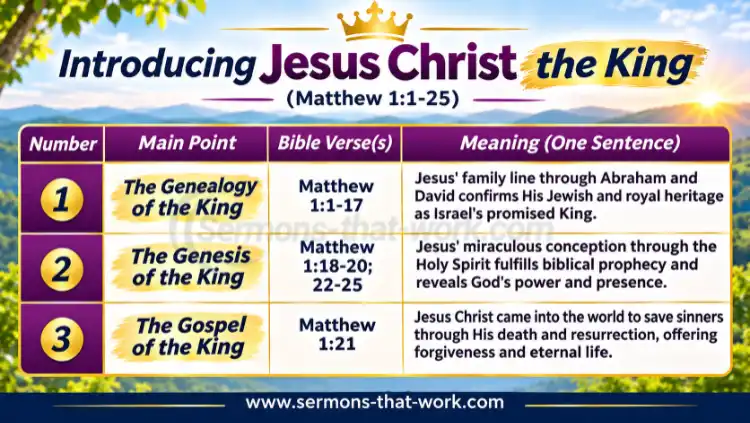
| Introducting Jesus Christ the King: Matthew 1:1-25 – Free Sermons That Work | |||
|---|---|---|---|
| Number | Main Point | Bible Verse | Meaning |
| 1 | The Genealogy of the King | Matthew 1:1-17 | Jesus’ family line through Abraham and David confirms His Jewish and royal heritage as Israel’s promised King. |
| 2 | The Genesis of the King | Matthew 1:18-20; 22-25 | Jesus’ miraculous conception through the Holy Spirit fulfills biblical prophecy and reveals God’s power and presence. |
| 3 | The Gospel of the King | Matthew 1:21 | Jesus Christ came into the world to save sinners through His death and resurrection, offering forgiveness and eternal life. |
Source Material
William MacDonald, Believer’s Bible Commentary, rev. ed. (Nashville: Thomas Nelson, 1995), 1203-1206
John MacArthur, The MacArthur Bible Commentary (Nashville: Thomas Nelson, 2005), 1119-1120
John F. Walvoord and Roy B. Zuck, eds., The Bible Knowledge Commentary: New Testament (Colorado Springs, CO: David C. Cook, 1985), 18-20